Sellers • February 14, 2026

Is Bigger Better? Not Anymore. Here Is What Northeast Arkansas Buyers Actually Want in 2026

If you have been scrolling through Zillow lately or thinking about listing your home in Jonesboro or Batesville, you might be surprised by what is actually moving the needle this year.

For a long time, the “bigger is better” mindset ruled the market. We all remember the era where giant foyers and endless square footage were the ultimate status symbols. But honestly? Times have changed.

After looking at twenty years of data, Zillow found that buyers today are trading “massive” for “manageable.” Whether you are in Brookland, Paragould, or right here in Jonesboro, here is what buyers are actually looking for when they walk through your front door.

Why the “McMansion” is Taking a Back Seat

In the past, a huge house was an easy way to justify a high price tag. But today, a giant house often translates to one thing in a buyer’s mind: Big Bills.

When people tour a home now, they aren’t just looking at the impressive entryway. They are asking themselves practical questions:

  • How much is it going to cost to heat and cool these high ceilings?

  • What is the insurance premium on a house with this much volume?

  • How much time am I going to spend cleaning rooms we never even use?

Practicality is the new luxury. A smart, efficient layout beats a drafty, oversized floor plan every single time.

Trading “Open Concept” for “Purposeful Spaces”

We have all heard that “open concept” is king, but the data shows a shift toward privacy. Zillow has seen a massive jump in listings mentioning “reading nooks.” People want a place to take a Zoom call or just relax without the whole house hearing them.

And here is a tip that might scare some sellers: Stop being afraid of color.

The old rule was to paint everything “Realtor Beige” or “Agreeable Gray.” But lately, mentions of “color drenching” are way up. Buyers are actually willing to pay a premium for homes with personality. Think deep olive greens, navy blues, or charcoal grays. Don’t strip the soul out of your home just to play it safe.

The Upgrades That Actually Add Value

If you are going to spend money before listing, don’t just think about pretty finishes. Think about efficiency and lifestyle. In our neck of the woods, we are seeing a huge surge in interest for:

  • Wellness Features: Spa-inspired bathrooms are a massive hit right now.

  • Energy Independence: Whole-home batteries and EV charging stations are becoming standard requests.

  • Outdoor Fun: Believe it or not, mentions of pickleball courts are up 25 percent!

Bottom Line for NE Arkansas Sellers

If you want to win in today’s market, show the buyer that your home is supportive and intuitive. It is not just about the square footage. It is about how that space makes them feel and how much it costs them to live there.

Thinking about making a move or wondering how your specific layout stacks up against these new trends? I would love to chat and help you get the best value for your property.


Check out my other blogs!
Follow me on Facebook or Instagram.

Buyers • FAQ • February 8, 2026

How does getting pre-approved for a mortgage work, and why is it important before looking at homes locally?

Pre-approval is about confidence and protection. It tells you what is realistic, not just what is possible.

When you get pre-approved, a lender reviews your financial information and gives you a clear range. This prevents wasted time and emotional letdowns.

In Craighead County, sellers want certainty. A pre-approval shows strength and seriousness. It gives your offer credibility.

More importantly, it gives you peace of mind. You can shop confidently knowing you are making smart, informed decisions for your future.


Check out my other blogs!

Follow me on Facebook or Instagram.

Sellers • February 7, 2026

Home Improvements That Add the Most Value Before You Sell

When you’re getting ready to sell your home here in Jonesboro or anywhere across Northeast Arkansas, every dollar you spend needs to do one job: come back to you with friends.

I talk to homeowners all the time who aren’t sure if they should dive into a massive renovation or just slap on a coat of paint. The truth is, you don’t need to gut your kitchen to see a massive jump in your sale price. You just need to be strategic. It’s all about understanding the leverage you have. In this case, your leverage is “perceived value.”

Here is how to spend your money wisely so you can walk away from the closing table with the biggest check possible.


High-ROI Projects: The Heavy Hitters

First impressions are everything. Before a buyer even steps through the front door, they’ve already started judging your home. If the outside looks sharp, they assume the inside is well-maintained too.

Check out these national averages for ROI (Return on Investment). Some of these might surprise you:

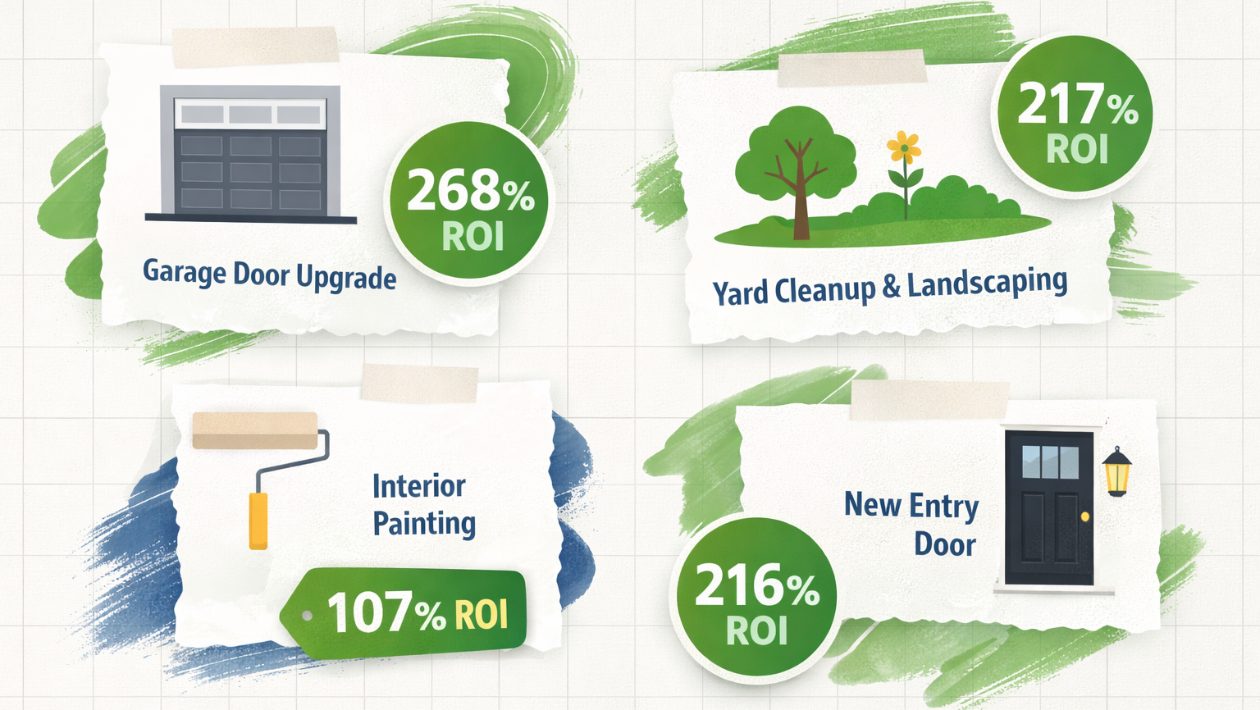
  • Garage Door Refresh: Spending about $4,600 can actually add over $12,500 in value. That’s a 268% ROI.

  • Yard Cleanup: A simple $400 professional landscaping touch-up can bring back $900.

  • New Entry Door: Swapping an old front door for a steel one costs about $2,400 but adds over $5,000 in resale value.

  • Stone Veneer Accents: Adding some stone to the front of your house has been a huge trend lately, seeing over 200% ROI.

Low-Cost DIY Wins

You don’t need a massive budget to make a house feel “new.” If you’re willing to put in a little elbow grease, these updates pay off big time:

  • Fresh Paint: Stick to neutral tones. It makes the space feel bigger and cleaner. You’re looking at a 107% ROI.

  • Refinishing Hardwoods: If you’ve got wood floors hiding under old carpet, pull it up! Refinishing them sees about a 147% return.

  • Closet Organization: Buyers love storage. Simple shelving systems make closets look twice as big.

Mid-Range Upgrades That Make Sense

If you have a bit more time before we list your property, these projects add serious “lifestyle” value:

  • Outdoor Living: Whether it’s a wood deck or a paver patio, people in Arkansas love their outdoor space. You’ll usually get about 95% of your money back on these.

  • Smart Home Tech: Adding a smart thermostat or security cameras costs around $3,000 but makes your home feel modern and efficient to younger buyers.


My Strategy for Northeast Arkansas Sellers

Every neighborhood from Jonesboro to Batesville is a little different. Before you start swinging a hammer, keep these rules in mind:

  1. The 5-Minute Rule: Focus on what buyers see in the first five minutes.

  2. Don’t Over-Improve: You don’t want to have the only $500,000 house in a $300,000 neighborhood.

  3. Stay Neutral: Avoid “custom” looks. We want the buyer to see their furniture in your house, not yours.

The goal is to move the needle on your home’s value without the stress of a six-month construction project. Sometimes, a deep clean and some professional staging do more for your bottom line than a new bathroom ever could.

Thinking about selling and want to know which project to tackle first? Give me a shout.


Check out my other blogs!

Follow me on Facebook or Instagram.

Sellers • February 2, 2026

5 Things Buyers Don’t Actually Care About When Selling Your Home

Hey! Most folks I talk to here in Jonesboro start the selling process with the best intentions. You want your house to look its absolute best. You hop on Google, read a few articles, and suddenly you feel like you need a total home makeover before you can even plant a “For Sale” sign in the yard.

The list gets long fast. You start thinking about new paint, new floors, and fancy new counters. Before you know it, selling your home feels like a massive renovation project.

But here is the truth I’ve learned from years of negotiating and selling real estate in Northeast Arkansas: Buyers care way less about the small details than you think they do.

If you focus on the wrong things, it can cost you time and money. It can also kill your momentum. Let’s look at what buyers in our market actually care about and what you can probably skip.


5 Things Buyers Rarely Care About (As Much as You Think)

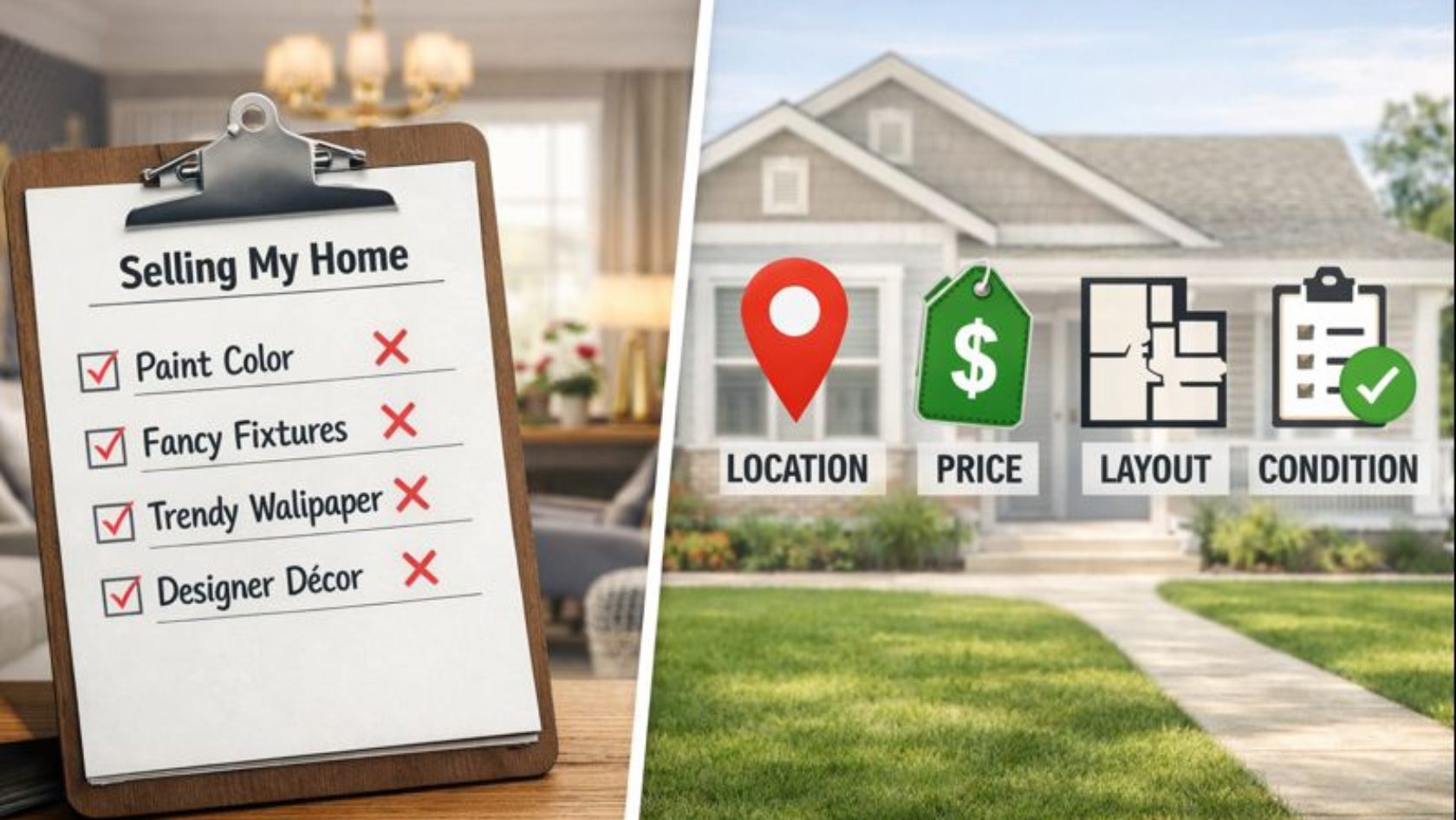
1. Your Personal Style You might love that bold accent wall or the custom wallpaper in the dining room. But when a buyer walks through a home in Jonesboro, they want to imagine their own life there. They are looking at the space, the natural light, and how the rooms flow. Most buyers do not fall in love with your decor. They fall in love with the bones of the house.

2. Small Cosmetic Upgrades A lot of sellers think every dollar they spend on an upgrade comes back to them. That is not usually how it works. Things like trendy backsplashes or new cabinet handles are “nice to have,” but buyers rarely pay more for them. They care more about how your home compares to the house down the street.

3. Highly Customized Features That themed home office or built-in aquarium might be your favorite part of the house. To a buyer, it looks like a project. They see something they have to pay to remove. It is better to keep your spaces neutral and flexible so the next family can use the room however they need.

4. Minor Imperfections Do not panic over a tiny scuff on the floor or a small crack in the drywall. Most buyers expect a little wear and tear. In a busy market like NEA, people are looking for structural integrity and solid systems, not a house that belongs in a museum.

5. How Much Money You Spent It is natural to think your home is worth more because you put a lot of money into it. But the market does not care about your receipts. Buyers look at comparable sales in your neighborhood and the current supply and demand. As Chris Voss says in Never Split the Difference, it is about the reality of the situation, not just what we want it to be.


What Jonesboro Buyers Actually Pay Attention To

If you want to get your home sold fast and for top dollar, focus on the “Big Rocks.” These are the things that make buyers feel confident or make them walk away.

  • The Roof: Obvious wear or leaks are a huge red flag.

  • The Foundation: Uneven floors or big cracks will scare people off.

  • HVAC and Plumbing: People want to know the “guts” of the house are in good shape.

  • Space and Layout: Can their family fit here?

  • Price: Is it priced right for the local Northeast Arkansas market?

Cosmetic issues lead to negotiations. Big structural problems lead to people walking away.


The Bottom Line

Your home does not have to be perfect to sell. It just needs to be clean, solid, and well cared for. Most buyers are happy to pick their own paint colors after they move in. What they do not want are surprise repairs and big mysteries.

If you are thinking about selling this spring, do not wait months chasing upgrades that might not even matter. The smartest move is usually to get on the market sooner with a home that is prepared the right way.

If you want to know which projects are worth your time and which ones aren’t, I’m happy to help.


Check out my other blogs!

Follow me on Facebook or Instagram.

FAQ • Sellers • February 1, 2026

What costs should I expect when selling a home in Craighead County, Arkansas?

Understanding the costs of selling a home helps reduce anxiety and gives you control over the process. Surprises create stress. Clarity creates confidence.

The most significant cost is typically the real estate commission, which covers marketing, negotiation, communication, and representation from listing through closing. Other costs can include title fees, deed preparation, and prorated property taxes.

Some sellers also negotiate buyer closing costs or agree to repairs following inspections. These are not automatic, but they are part of many transactions in our area.

Before listing, I provide a clear estimate of what you can expect net proceeds to be. This allows you to plan ahead and make decisions without pressure.

Selling a home should feel informed and intentional, not confusing or rushed. Knowing the numbers upfront allows you to move forward with confidence.


Check out my other blogs!

Follow me on Facebook or Instagram.

Buyers • FAQ • January 25, 2026

What are the most common mistakes first-time home buyers make in Northeast Arkansas, and how can I avoid them?

First-time buyers often carry a lot of pressure. You want to make the right decision, protect your money, and avoid regrets. Most mistakes happen when buyers feel rushed, uninformed, or unsupported.

One common mistake is starting the search online without guidance. While browsing homes is fun, it can also create confusion and unrealistic expectations. Another mistake is focusing only on the monthly payment instead of the full cost of ownership.

Emotions also play a role. Falling in love with a home too quickly can cloud judgment. That is why inspections, patience, and honest conversations matter.

Skipping pre-approval is another big misstep. Without it, buyers risk disappointment and lost opportunities.

The biggest mistake, though, is trying to navigate the process alone. Buying a home is not something you should have to figure out through trial and error.

My goal is to protect you from avoidable stress, help you make confident decisions, and guide you through the process with clarity and care.


Check out my other blogs!

Follow me on Facebook or Instagram.

Buyers • January 24, 2026

More Leverage Buying a Home Than Over a Decade

If you’re thinking about buying a home in 2026, and you’ve been feeling like the market has been tilted against you for the last few years, you may finally be catching a break.

A recent Redfin report is showing something we have not seen in a long time: buyers have more negotiating power than they have had in over a decade. Nationally, sellers are now outnumbering buyers by a record margin. That does not mean every home is suddenly cheap or that you can sleepwalk into a deal, but it does mean you do not have to sprint through the process just to keep up.

And in a market like Jonesboro, that shift matters.

Why buyers are gaining leverage right now

The biggest reason is simple: there are more people trying to sell than there are people ready to buy. Redfin reported there are 47.1% more sellers than buyers nationally right now. When that happens, sellers have to compete harder for attention, and buyers get more choices.

Compared to the last few years when it felt like every decent home had multiple offers in a weekend, we are seeing more listings hang around a little longer, more price adjustments, and more sellers willing to talk terms.

Translation: you get time to think again.

What leverage looks like in real life

Leverage is not just a headline. It shows up in the conversations you get to have during the deal. In this kind of market, buyers often have more ability to:

  • Negotiate price with a little more breathing room

  • Ask for closing cost help or other concessions

  • Keep inspections in place instead of feeling forced to waive protections

  • Negotiate repairs, timelines, and terms that actually fit your life

That does not mean every seller is “giving houses away.” Great homes that are priced right still move. But it does mean you are more likely to have a real seat at the table.

How this is showing up in Jonesboro and Northeast Arkansas

Real estate is always local, and Jonesboro has its own rhythm. We have steady demand because of Arkansas State, the medical community, and people relocating into the area for work and family. So yes, some pockets and certain “move-in ready” homes still get snapped up quickly.

But we are also seeing more moments where buyers can slow down and be strategic, especially when:

  • A home has been sitting longer than expected

  • The price is a little ahead of the market

  • The seller needs to move on a timeline

  • The property needs repairs or updates

That is where opportunity usually lives: not in the perfect house, but in the house where the seller is open to a smart, clean offer with the right terms.

How to use this moment to your advantage

When buyers have leverage, speed is not the superpower, strategy is. If you are shopping in 2026, here are a few simple moves that can put you in the driver’s seat:

  • Study what is actually selling in Jonesboro, not just what people are listing for

  • Watch the homes that have been on the market longer and ask why

  • Get crystal clear on your budget comfort, not just what a lender says you can do

  • Make offers that protect you, but still feel fair and strong

Trying to perfectly time the market almost never works. Making a thoughtful decision that fits your finances and your lifestyle usually does.

The bottom line for Jonesboro buyers

You have more leverage today than you have had in years, and that can make the buying process feel a lot more balanced. You may have more room to negotiate, more time to make a good decision, and more ability to protect yourself during the process.

If you are considering buying in Jonesboro or anywhere in Northeast Arkansas, this is a solid time to explore your options. Even if you are early in the process, understanding what is changing can help you move forward with confidence and a plan.


Check out my other blogs!

Follow me on Facebook or Instagram.

Buyers • January 21, 2026

7 Questions to Ask Yourself Before You Move

The end of the year has a way of slowing everything down.

And for a lot of people, that creates space for a question that’s been sitting in the background for a while:

“Should we make a move next year… or stay put?”

If that thought has crossed your mind—even casually—you don’t need to decide anything right now. But asking the right questions can give you clarity without pressure.

Below are seven simple questions to walk through before making any real estate decision in 2026.

1. What’s Actually Driving the Thought of Moving?

Most people don’t think about moving “randomly.” Something usually triggers it.

Ask yourself:

  • Are we reacting to a lifestyle change (space, location, family needs)?
  • Is this more about finances or monthly costs?
  • Are we feeling stuck or just curious about options?

One of the most important distinctions is whether this thought is coming from discomfort or opportunity. Those lead to very different decisions, timelines, and outcomes.

2. Is This a Timing Question… or a Readiness Question?

A lot of people frame their decision as “Should we wait?”
A better question is “What would need to feel clearer before we move?”

Consider:

  • Are the timing parameters about the market or about uncertainty in our own situation?
  • Are we waiting for a specific milestone (job change, school year, savings goal)?
  • If nothing changed for another year, how would that feel?

The goal here isn’t urgency. It’s understanding what’s actually missing.

3. What Are We Most Afraid Might Go Wrong?

Uncertainty often hides behind vague hesitation.

Try naming it:

  • What specifically worries us about moving?
  • Is it financial risk, regret, disruption, or the unknown?
  • If we knew how to protect against that risk, would this feel different?

Most hesitation isn’t about the market. It’s about unanswered questions.

4. If We Wait, What Are We Hoping Will Change?

Waiting feels safe, but it’s still a decision.

Ask yourself:

  • Are we waiting for rates, prices, or confidence?
  • If those things don’t change the way we expect, how long would we keep waiting?
  • What’s the tradeoff of staying exactly where we are for another year?

There’s no right or wrong answer here, only awareness.

5. What Outcome Matters More to Us?

Whether buying or selling, every move comes down to priorities.

Ask yourself:

  • Are we more focused on monthly comfort or long-term equity?
  • Is flexibility more important than maximizing price?
  • Are we trying to minimize stress, maximize opportunity or something else?

There’s no universally “right” answer. But clarity here makes every future decision easier and less emotional.

6. What Would Make This Feel Like a Smart Decision in Hindsight?

Instead of predicting the market, try flipping the question.

Imagine it’s late 2026 and you’re looking back. What would make you say, “I’m glad we handled it that way”?

Ask yourself:

  • What would make us feel confident in how we handled this?
  • Would we regret rushing—or regret not preparing?
  • What version of this decision would feel intentional instead of reactive?

Most good outcomes come from preparation, not perfect timing.

7. What Information Would Reduce Guesswork Right Now?

You don’t need all the answers to move forward. You just need fewer unknowns.

Helpful clarity often comes from:

  • Understanding your real buying or selling range
  • Knowing what options actually exist (not just headlines)
  • Having a rough plan, even if it’s a year out

Final Thought

You don’t need to commit to anything before you’re ready

But if a move is even loosely on your 2026 radar, the smartest first step isn’t browsing listings or watching headlines; it’s getting clear on what actually matters to you.

And if you ever want help talking through those questions with real numbers and no pressure, that’s a conversation worth having.


Check out my other blogs!

Follow me on Facebook or Instagram.

FAQ • Sellers • January 18, 2026

How is the value of my home determined, and how do you decide on the right listing price locally?

Pricing your home is one of the most important decisions you will make, and it is also one of the most emotional. Your home holds memories, milestones, and meaning. At the same time, buyers see it through a very different lens.

Home value is determined by data, not emotion. I analyze recent comparable sales, current competition, location, condition, and buyer behavior in your specific area. Homes in Jonesboro can price very differently than similar homes just outside city limits, and rural properties require an entirely different evaluation.

Condition matters. Updates, maintenance, layout, and functionality all influence value. Two homes with the same square footage can attract very different buyers depending on how they feel when someone walks through the door.

Pricing correctly from the start creates momentum. It attracts attention, builds confidence with buyers, and often leads to smoother negotiations. Overpricing can cause a home to sit, which leads buyers to wonder what is wrong, even when nothing is.

I believe in transparency. I explain the data, the strategy, and the reasoning behind the price so you feel confident and informed. The goal is not just to list your home, but to position it to sell with strength and clarity.


Check out my other blogs!

Follow me on Facebook or Instagram.

Buyers • January 17, 2026

Why January Is the Cheapest Month to Buy a Home

If you’re chomping at the bit to buy a home this year, January might be your best shot to make a smart move in Jonesboro.

I know what a lot of folks are thinking. “Craig, we’ll just wait until May. More homes hit the market then.”

And you’re not wrong about inventory. Spring usually brings more options.

But it also brings the crowd.

More buyers show up at the same time, which means more competition, more multiple offers, and a whole lot less negotiating power. In real estate, the biggest wins usually go to the first movers, not the late arrivals.

What the research is showing

A new LendingTree study found that buying in January can save buyers over $20,000 compared to buying in May.

They looked at home sales across 2024 and found that buyers who purchased a 1,500 square foot home in January paid about $23,400 less than buyers who bought a similar size home in May.

That is real money.

That can be down payment money. That can be closing costs. That can be the difference between stretching your budget and breathing easy month to month.

Why January is often cheaper

This pattern shows up almost every year.

In 2024, May was the most expensive month to buy, with a national median price of $194.20 per square foot. January was 8.0% cheaper at $178.60 per square foot. February was 5.4% cheaper at $183.70.

On a typical 1,500 square foot home, that gap between January and May adds up fast.

It comes down to behavior.

More buyers shop in the spring and summer. Americans buy about 1.4 times more homes in the summer than in the winter. More buyers equals more competition. More competition pushes prices up.

Even across different home sizes, the pattern holds. Prices per square foot tend to peak in early summer and hit their lowest point in January.

What the market looks like right now (and how that hits Jonesboro)

This “January advantage” is happening while the broader market has been cooling some.

Realtor.com has shown national pricing flattening a bit, and inventory has been improving year over year even though winter always has seasonal slowdowns.

Now, let’s bring it home to Jonesboro.

In Jonesboro, that shows up as a $299,900 median list price, 344 active listings, and 64 median days on the market.

Those numbers matter for one big reason: breathing room.

When homes are taking longer to sell, buyers tend to have more leverage and more options to negotiate.

Why buyers have more leverage in January

When homes sit longer, sellers listen more. Period.

Nationally, newly listed homes spend a median of 75 days on the market in January, compared to around 48 days from April through June. That difference changes how negotiations go.

If a home has been sitting for a couple months, sellers are typically more open to conversations about:

  • Price reductions

  • Seller paid closing costs

  • Repair credits

  • Interest rate buydowns

But when the market is hot and a home gets five offers in a weekend, those conversations disappear fast.

What that $23,000 really means for you

A $23,000 difference is not just “nice.” It can change your whole game plan:

  • Bigger down payment, which lowers your loan amount and payment

  • Better shot at 20% down and avoiding PMI

  • More savings left after closing

  • Less stress when real life happens (because it always does)

So should you buy now or wait?

Full disclosure, January is not perfect. There are usually fewer homes to pick from. You might not see five versions of the same house pop up in the same neighborhood.

But the tradeoff is leverage:

  • Less competition

  • More flexible sellers

  • Prices are often lower than what spring brings

If you’re planning to buy in Jonesboro this year anyway, it’s worth at least looking now. Sometimes the calendar alone can save you tens of thousands of dollars, and that’s not something you see every day in real estate.

You don’t have to rush.

You just shouldn’t ignore what the data is telling you.


Check out my other blogs!

Follow me on Facebook or Instagram.